
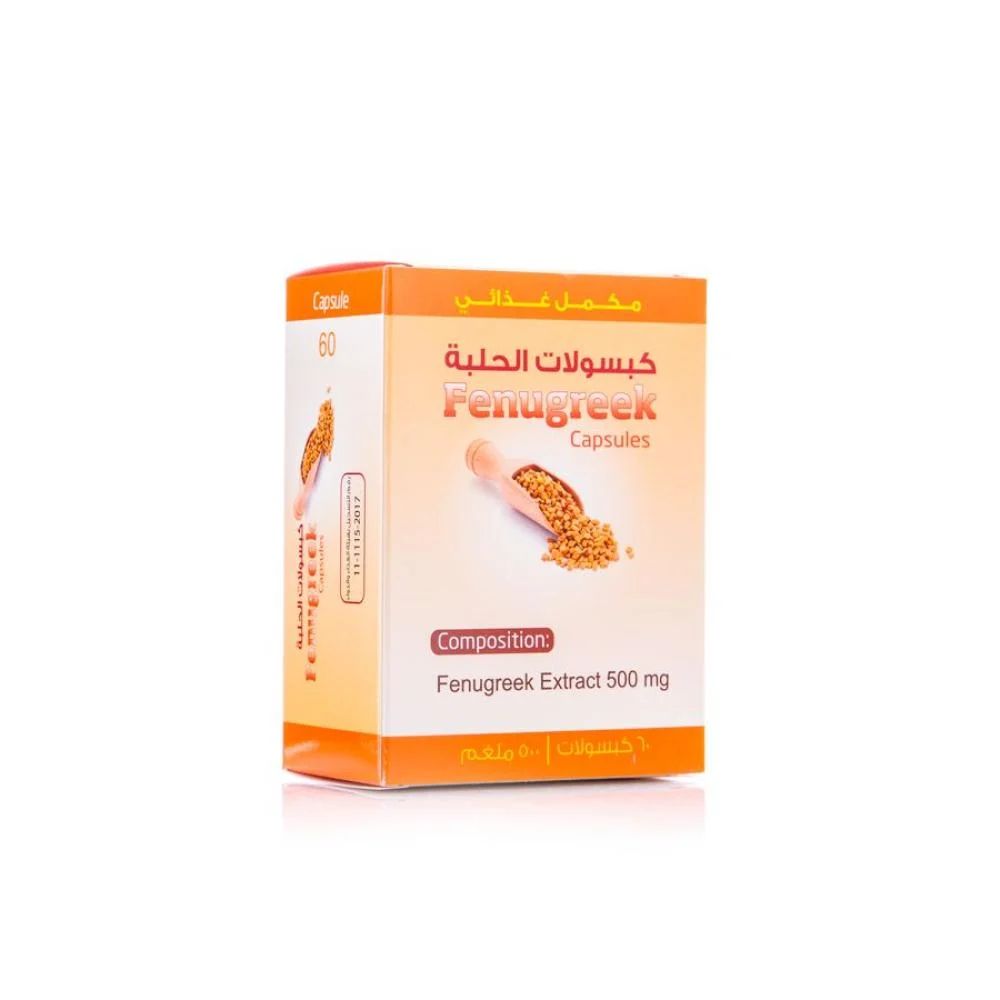
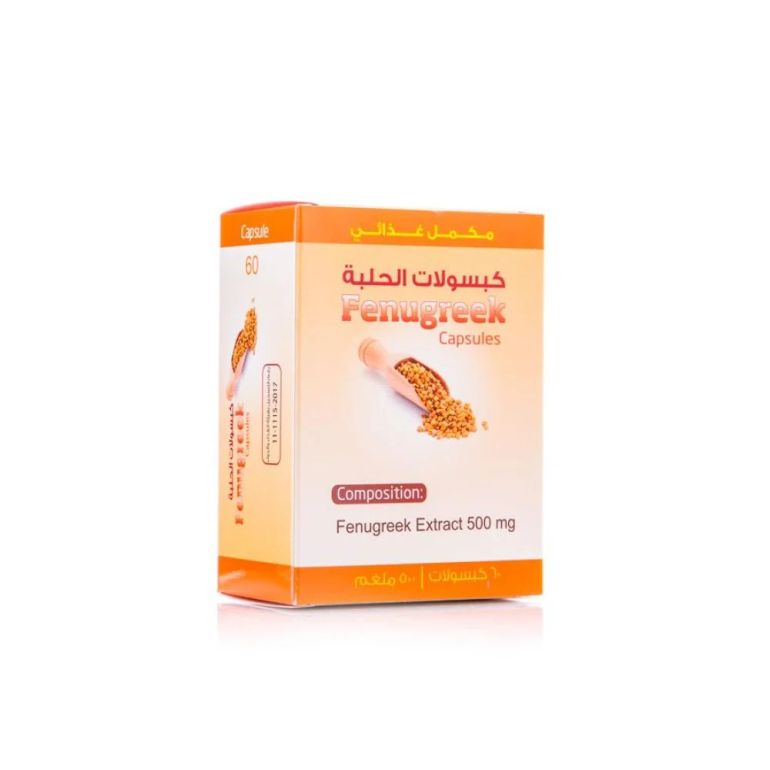

Fenugreek Seed 500mg – 60 Capsules | Herbal Supplement for General Wellness & Breastfeeding Nutrition
Fenugreek 500mg, 60 capsules, is a herbal supplement containing fenugreek seeds. Traditionally used by breastfeeding mothers interested in milk supply and general wellness. Evidence for increasing breast milk is mixed.
more information
SAR 98.00
+
Earn loyalty points with this purchase
Rewardsproduct sku
Z.17904591391714866
Weight
kg
share product
product description
Fenugreek Seed 500mg – 60 Capsules | Herbal Supplement for General Wellness and Traditional Breastfeeding Support
What Is Fenugreek 500mg?
Fenugreek 500mg – 60 Capsules is an oral herbal dietary supplement containing 500mg of fenugreek seed ingredient per capsule.
Fenugreek, scientifically known as Trigonella foenum-graecum, is a plant whose seeds have traditionally been used in cooking, herbal preparations and nutritional products.
Fenugreek seeds contain naturally occurring plant compounds, including dietary fibers, saponins and selected flavonoids.
The herb has a long history of traditional use among breastfeeding mothers who are interested in supporting breast milk production.
However, research on fenugreek for lactation has produced mixed results.
Some studies have reported modest changes in milk volume in selected groups, while other studies have not found reliable improvements.
For this reason, Fenugreek 500mg should not be presented as a guaranteed way to increase breast milk supply.
Fenugreek has also been investigated for possible effects on blood glucose, digestion, appetite and other metabolic outcomes, although clinical evidence is limited or inconsistent.
This product is supplied in 60 oral capsules, with a registered strength of 500mg.
The Saudi regulatory record lists the 500mg, 60-capsule product as manufactured in the United States.
Fenugreek is a dietary supplement, not a replacement for medical care, breastfeeding assessment or prescribed treatment.
Key Benefits and Features
1. Contains Fenugreek Seed Ingredient
Each capsule provides 500mg fenugreek according to published product details.
Fenugreek is a traditional culinary and herbal ingredient containing naturally occurring plant compounds.
2. Traditional Interest in Breast Milk Supply
Fenugreek has been used in several cultures by breastfeeding mothers interested in milk production.
It is commonly described as a herbal galactagogue.
However, scientific evidence for this use remains inconsistent.
3. Research on Lactation
Some clinical trials and reviews have investigated fenugreek in breastfeeding mothers.
Certain studies have shown modest effects, while others found no meaningful change in milk volume.
The results do not establish guaranteed effectiveness for this specific product.
4. Breastfeeding Requires Individual Assessment
Low milk supply may be related to breastfeeding technique, feeding frequency, ineffective milk removal or medical factors.
Herbal products cannot reliably correct every underlying cause.
Advice from a healthcare professional or lactation consultant may be more important than supplementation.
5. Supports Interest in Herbal Wellness
Fenugreek is a familiar herb used in traditional food and wellness practices.
Some adults prefer obtaining herbal ingredients in capsule form.
Traditional use does not necessarily establish clinical effectiveness or safety at all doses.
6. Research Interest in Digestive Function
Fenugreek seeds naturally contain fibers and other plant compounds.
They have been used traditionally in relation to digestion.
However, this capsule product is not an established treatment for constipation, indigestion or irritable bowel syndrome.
7. Contains Naturally Occurring Fiber
Fenugreek seeds contain dietary fiber.
However, a 500mg capsule should not be considered equivalent to a substantial serving of dietary fiber.
8. Research Interest in Appetite
Fenugreek has traditionally been associated with appetite and dietary routines.
However, evidence does not establish that this product reliably increases or decreases appetite.
9. Not a Guaranteed Weight Gain Product
Some people use fenugreek supplements while trying to gain weight.
However, there is insufficient evidence to guarantee increased body weight from taking fenugreek capsules.
Appropriate calorie intake and assessment of underlying health issues remain important.
10. Not a Proven Weight Loss Treatment
Other sources promote fenugreek for appetite management and weight loss.
However, the evidence does not establish reliable weight reduction with this product.
It should not be marketed as both a guaranteed weight-gain supplement and a guaranteed weight-loss supplement.
11. Research Interest in Blood Glucose
Some studies have investigated fenugreek and blood glucose levels.
Preliminary findings suggest possible glucose-lowering effects, but many studies have methodological limitations.
Fenugreek is not a replacement for diabetes treatment.
12. Natural Plant Compounds
Fenugreek seeds contain saponins, flavonoids and other phytochemicals.
These ingredients have attracted laboratory and nutritional research interest.
However, laboratory findings do not establish disease-prevention or treatment benefits for the finished capsules.
13. Convenient Capsule Format
The capsules offer an alternative to preparing fenugreek tea or using ground seeds in recipes.
Swallow according to the original package instructions.
14. Clearly Declared 500mg Strength
The product has a published 500mg strength per capsule.
This identifies the listed amount of fenugreek ingredient but does not establish the precise concentration of individual phytochemicals.
15. Sixty Capsules per Package
One box contains 60 capsules.
At two capsules daily, the package provides a 30-day supply.
16. Registered in Saudi Arabia
Fenugreek Capsules 500mg, 60 capsules, are listed in Saudi regulatory records under registration number 2702233300.
The entry identifies the United States as the manufacturing country and an OTC classification.
Main Ingredient: Fenugreek Seeds
Scientific name: Trigonella foenum-graecum.
Declared amount: 500mg per capsule.
Fenugreek seeds are used in food and traditional herbal preparations.
Their naturally occurring constituents include various fibers and phytochemicals.
The complete product label should be checked to distinguish between powdered fenugreek seeds and a concentrated extract, and to confirm inactive ingredients and allergens.
Does Fenugreek Increase Breast Milk?
It has a long history of traditional use for this purpose.
However, clinical studies have produced mixed results.
The U.S. National Library of Medicine's LactMed database explains that evidence is insufficient to reliably establish a milk-supply benefit.
Breastfeeding support and evaluation should not be replaced by herbal supplements.
Is Fenugreek Safe While Breastfeeding?
Some breastfeeding mothers use fenugreek supplements, but safety information for high or supplemental amounts remains limited.
Side effects and interactions can occur.
A healthcare professional should review its suitability before use.
Does Fenugreek Increase Prolactin?
Researchers have proposed possible biological mechanisms related to hormone signaling.
However, the evidence does not establish that the product reliably increases prolactin or breast milk volume.
Does Fenugreek Increase Appetite?
Fenugreek has been used traditionally for appetite-related purposes.
However, a predictable increase in appetite cannot be guaranteed.
Can Fenugreek Cause Weight Gain?
There is insufficient evidence that this supplement reliably causes weight gain.
Body weight depends on many nutritional, medical and lifestyle factors.
Does Fenugreek Help With Weight Loss?
Fenugreek is not an approved weight-loss treatment.
There is insufficient evidence to guarantee reduced appetite or loss of body fat.
Can Fenugreek Lower Blood Sugar?
Certain fenugreek preparations have been investigated for possible glucose-lowering effects.
However, it is not a replacement for diabetes medication.
Combining fenugreek with insulin or other glucose-lowering drugs may increase the risk of hypoglycemia in some individuals.
Does Fenugreek Help Digestion?
Fenugreek has traditional digestive uses, but it can also cause gas, diarrhea, bloating and nausea.
Individuals with sensitive digestive systems should exercise caution.
Can Fenugreek Be Taken During Pregnancy?
Supplemental amounts of fenugreek should be avoided during pregnancy unless specifically approved by a clinician.
Fenugreek use in amounts greater than normal food quantities raises safety concerns during pregnancy.
Can Children Take Fenugreek Capsules?
There is insufficient evidence to establish safety of supplemental fenugreek doses in children.
Do not give the product to children without medical guidance.
Can Fenugreek Cause Allergies?
Yes.
Fenugreek may trigger allergic reactions, including potentially severe reactions.
Cross-reactivity with legumes, including peanuts and chickpeas, has been reported.
People with relevant allergies should seek professional advice or avoid the supplement.
Can Fenugreek Interact With Warfarin?
Fenugreek may interact with warfarin and increase bleeding concerns.
Do not combine the supplement with anticoagulant treatment without medical review.
How to Use Fenugreek 500mg
The pictured 60-capsule product displays two capsules daily as the dose.
However, published retailer directions vary.
Always follow the exact purchased package or healthcare professional's instructions.
General directions:
- Read the original package label.
- Swallow capsules with water.
- Follow the recommended number of capsules per day.
- Take with meals if instructed by the label.
- Do not exceed the recommended serving.
- Avoid increasing the dose in an attempt to boost milk supply.
- Seek advice before use during breastfeeding or with regular medication.
How Long Does One Pack Last?
- Two capsules daily: 30 days.
- One capsule daily, if specifically recommended: 60 days.
Possible Side Effects
Potential adverse effects include:
- Nausea.
- Abdominal discomfort.
- Gas.
- Bloating.
- Diarrhea.
- Maple syrup-like odor of sweat or urine.
- Low blood glucose in susceptible individuals.
- Allergic reactions.
Rare serious reactions have been reported with fenugreek-containing products.
Important Warnings and Precautions
- Dietary supplement, not a substitute for a balanced diet.
- Not guaranteed to increase breast milk supply.
- Do not use as a substitute for breastfeeding assessment.
- Avoid supplemental doses during pregnancy without medical approval.
- Consult a healthcare professional before use while breastfeeding.
- Review use with insulin or glucose-lowering medicines.
- Consult your doctor if taking warfarin or other anticoagulants.
- Avoid use with a known fenugreek allergy.
- Exercise caution with peanut, chickpea or other legume allergies.
- Do not exceed the recommended serving.
- Not a treatment for diabetes, infertility, digestive disease or weight disorders.
- Children require medical guidance.
- Stop use if significant allergic or adverse reactions occur.
- Keep out of reach of children.
- Do not use after the expiry date.
Severe Allergy Warning
Stop use and seek emergency care for difficulty breathing, swelling of the face or throat, severe dizziness or symptoms suggesting anaphylaxis.
Storage Instructions
- Store in a cool, dry place.
- Protect from direct sunlight and moisture.
- Follow the temperature instructions on the original package.
- Keep in the original container.
- Keep out of reach of children.
- Follow the expiry date.
Frequently Asked Questions
What is Fenugreek 500mg?
A herbal supplement containing fenugreek seed ingredient.
How many capsules are included?
What is the declared strength?
500mg per capsule.
Is fenugreek traditionally used for breastfeeding support?
Yes, but effectiveness is not reliably established.
Does it guarantee increased breast milk?
No.
Does it increase prolactin?
A reliable increase has not been established.
Can it help with appetite?
Traditional use exists, but a predictable benefit is not proven.
Does it cause weight gain?
Weight gain cannot be guaranteed.
Does it help with weight loss?
It is not an established weight-loss treatment.
Can it affect blood glucose?
Possibly; caution is important when taking diabetes medication.
Can it cause digestive side effects?
Yes, including gas, nausea and diarrhea.
Is it safe during pregnancy?
Supplemental amounts should generally be avoided.
Can breastfeeding mothers take it?
They should consult a healthcare professional first.
Can it cause allergic reactions?
Yes, including potential cross-reactivity with legumes.
Can it be used with warfarin?
Only after professional medical review.
What daily serving is shown on the pictured package?
Two capsules daily.
How long does a pack last?
30 days at two capsules daily.
Where is the registered product manufactured?
The United States, according to Saudi regulatory information.
Product Specifications
- Product Name: Fenugreek Capsules
- Main Ingredient: Fenugreek Seed
- Botanical Name: Trigonella foenum-graecum
- Declared Strength: 500mg per Capsule
- Dosage Form: Oral Herbal Capsules
- Pack Size: 60 Capsules
- Pictured Label Directions: Two Capsules Daily
- Pack Duration: 30 Days at That Serving
- Saudi Registration Number: 2702233300
- Registered Manufacturing Country: United States
- Saudi Dispensing Classification: OTC
- Inactive Ingredients: Refer to the Original Package
- Storage: Follow the Original Label
Buy Fenugreek 500mg – 60 Capsules at Al Jafen Pharmacy
Discover Fenugreek Seed 500mg – 60 Capsules, a herbal dietary supplement containing fenugreek seeds, traditionally used in breastfeeding-related wellness practices and general nutrition.
Shop Fenugreek and other herbal supplements online at Al Jafen Pharmacy, with delivery options in Buraydah and shipping across Saudi Arabia.
Follow the original package instructions and seek advice from a healthcare professional before use while breastfeeding, taking diabetes medication or using anticoagulants.
Questions
You may also like
 add to cart